The Robot That Folds Your Towels (Slowly, and With Help)
Six companies launched home robots in 2025. They can fold towels, load dishwashers, and sort laundry. They also can't close an oven door, handle sharp objects, or work unsupervised. The living room robot is finally real. It just needs a bit of help.
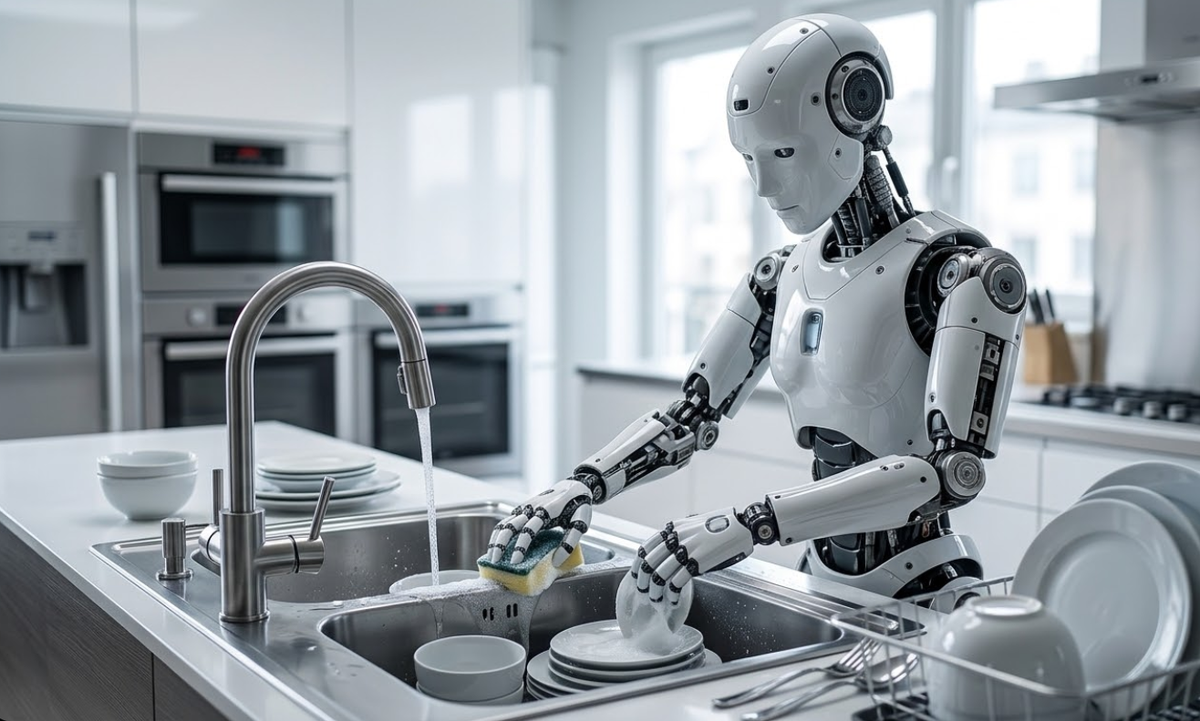
At CES 2026 in January, LG's CLOiD robot folded laundry on the show floor. It managed towels one by one, slowly, and only when an attendant laid each one out. It could place a croissant in the oven but not close the door afterwards. This was not a malfunction. This was the demonstration working as intended.
CLOiD was not alone. By the end of 2025, at least half a dozen companies had announced robots designed not for factories or labs but for living rooms, kitchens, and hallways. Figure AI launched its Figure 03 in October, a humanoid that can fold clothes and load a dishwasher, though a human still needs to start the wash and step in when it drops something. 1X Technologies opened pre-orders for NEO, which it called the world's first consumer-ready humanoid, priced at $20,000 for early access or $499 a month on subscription. A startup called Sunday introduced Memo, a robot trained on data from more than 500 real households using a wearable glove that records how people move, clean, and sort objects. German company Neura Robotics unveiled the third generation of its 4NE1, a humanoid designed to sort laundry and assist elderly people at home. SwitchBot revealed the Onero H1, a wheeled robot with articulated arms that can fill a coffee machine, wash windows, and fold clothes.
The pitch from every one of these companies sounds similar: give people back time. LG calls its vision the "Zero Labour Home." Neura's CEO frames it as keeping elderly people out of care homes for longer. Figure AI's CEO has said he wants a humanoid in every home within the decade.
The reality, right now, is more modest.
The Wall Street Journal tested 1X's NEO and found it may need to be controlled by a human, with a company representative peering into the home through the robot's cameras to complete chores. Figure 03's CEO admitted the main bottleneck is data: the robot needs vastly more real-world training before it can handle a genuinely messy house. Early NEO units come with strict constraints, including no sharp or hot objects and no homes with children in the first phase. LG has not announced a price or release date for CLOiD. Most of these robots move at a pace that would test the patience of anyone who actually needs help folding laundry.
The honest summary: the technology has crossed a threshold. These machines can now grip a towel, recognise a croissant, and navigate around a sofa. What they cannot yet do is handle the thousand small surprises that make a real home different from a demonstration stage. A dropped sock, a cat on the counter, a child's toy left on the stairs.
Why this matters for kids
This is a conversation worth having at home, because it sits right at the junction of two questions children understand instinctively. The first: what counts as a "simple" task? Folding a towel looks easy, but teaching a robot to do it has taken years of engineering, data collection, and AI training. The second: what would you actually want a robot to do in your house, and what would you rather do yourself?
Ask them. The answers tend to be more interesting than the marketing.
We have been promised household robots for decades. What changed in 2025 is that several of them now exist as physical objects you can pre-order, with real prices attached. Whether the robot that arrives in 2026 will close the oven door on its own remains, for now, an open question.