What Happened When Robots Ran a Real Race
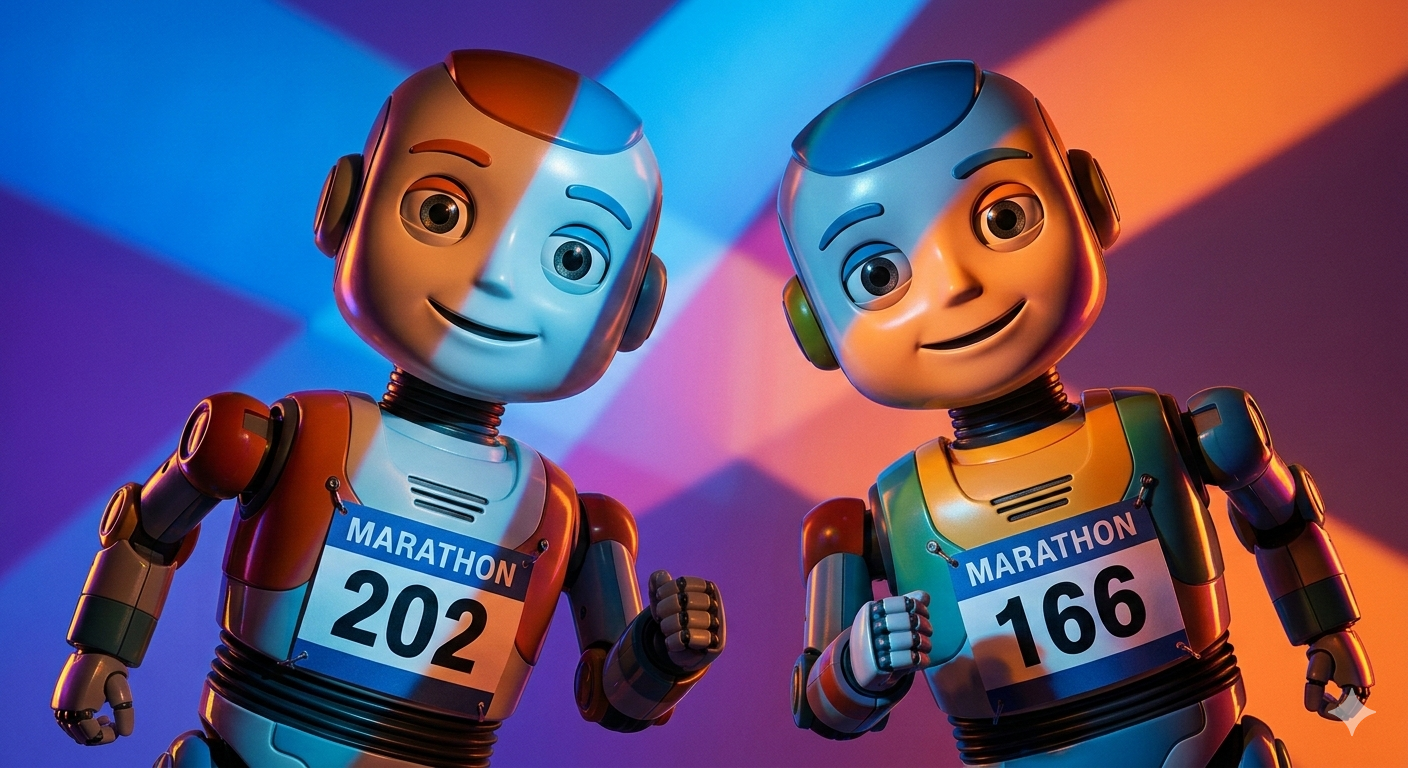
21 humanoid robots lined up for a real half marathon in Beijing (no simulation, no lab). Some stumbled, one needed helping up, and the fastest finished in 2h40. Not beating humans yet, but closer than anyone expected just five years ago.
By Julian
In April 2025, something extraordinary happened on the streets of Beijing: twenty-one humanoid robots laced up (metaphorically) and competed in a half marathon alongside human runners. Not a test run. Not a simulation. A real race, 21 kilometres, through a real city, with a real finish line.
The event, organised as part of China's push to showcase its robotics industry, drew robots from more than a dozen companies. Some stumbled. Some needed pit stops to swap out batteries. One reportedly took a tumble and had to be helped back up. But several crossed the finish line and that, in itself, is the headline.
The fastest robot completed the course in around two hours and 40 minutes. For context, the average human half marathon time is about two hours. So no, the robots aren't beating us yet. But the gap is closing in ways that would have seemed like science fiction just five years ago.
Why this matters
If you have a child who loves robots, this is the moment to sit down together and watch the footage. Because this isn't a robot in a lab picking up blocks. This is a machine navigating real terrain, adapting to uneven ground, managing energy over distance, and recovering from falls - all the things that make movement hard.
For years, the challenge in robotics wasn't building a robot that could walk. It was building one that could keep walking. Balance, stability, and endurance turn out to be extraordinarily complex problems. The fact that multiple robots finished a half marathon tells us that engineers are cracking them.
The bigger picture
China has made humanoid robotics a national priority, and this race was partly a display of that ambition. But the technology isn't unique to one country: companies in the US, South Korea, and Europe are developing similar machines. The race wasn't just between robots; it was between visions of what robots will do next.
For curious kids, this is a perfect starting point for bigger questions: How do robots balance? What powers them? What happens when they fall? How do engineers test a robot for something as unpredictable as a city race?
There are no bad questions here and the answers lead somewhere genuinely exciting.
Read the original story at NewsForKids.net