The Machine That Watches the Referee
The machine doesn't argue. It doesn't gesture. It just watches and when you tap your helmet, it tells you whether the referee got it right. Baseball is the latest sport to hand technology a seat at the table. Here's what that means for all of us.
Sport is where we're working that out. In public, in real time, with millions of people watching.
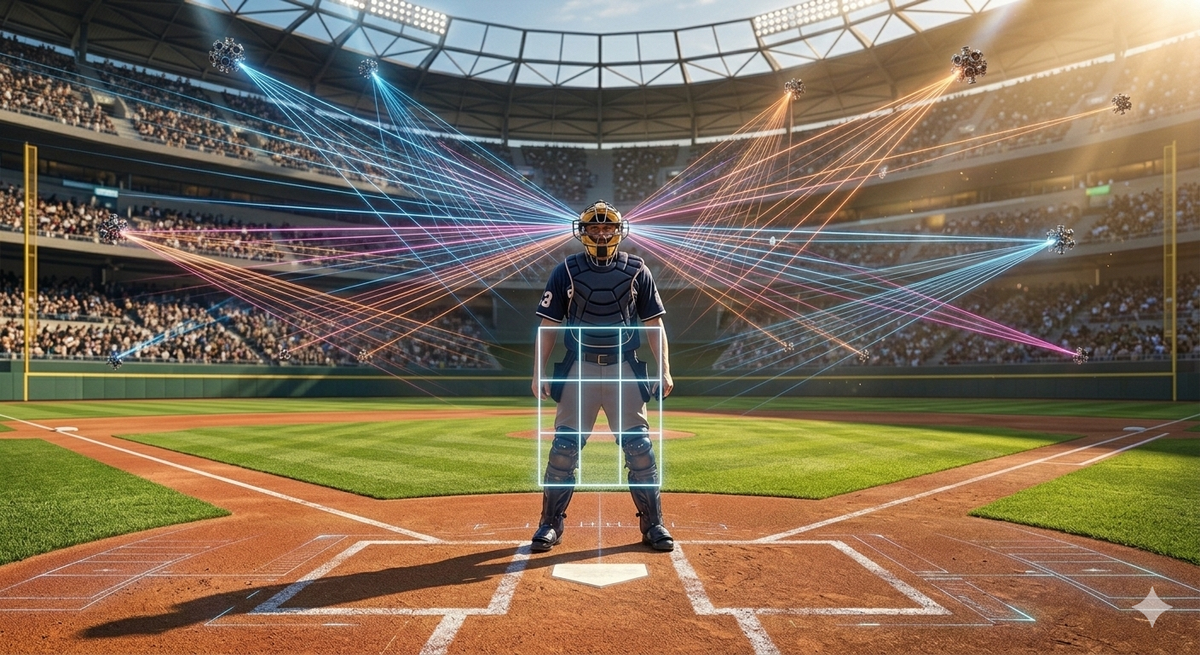
This season, for the first time in Major League Baseball history, a batter can challenge a ball or strike call without saying a word. They tap their helmet. Twelve Hawk-Eye cameras — installed around the perimeter of every ballpark — cross-reference the pitch against the strike zone in about 15 seconds. The call stands or it doesn't. No argument. No ejection. Just data.
It's a good story. But it's not a new idea.
Tennis did this in 2006. Hawk-Eye (the same technology) was introduced at Wimbledon to settle line calls that human eyes were getting wrong. Cricket followed. Football got VAR. Sport after sport has asked the same question: when the stakes are high enough, do we trust the human or the machine?
Baseball, famously resistant to change, just answered. Two decades late, but still.
What's interesting isn't the technology as camera tracking and computer vision have been around long enough to feel ordinary. What's interesting is the design of the system. The umpire still calls it first. The machine only speaks when challenged. Each team gets two challenges per game, and you lose one if you're wrong. It's not replacement. It's accountability.
MLB Commissioner Rob Manfred called it finding the right balance. Whether you agree probably depends on whether you think human judgment in sport is a feature or a bug.
Why this matters beyond baseball
For kids who follow sport, this is a live experiment in a question that goes well beyond the ballpark: how much should we let technology correct us?
It's the same question behind self-driving cars, AI medical diagnoses, and automated marking in schools. We keep arriving at similar answers - humans make the call, machines check the work - but we're still figuring out where the line sits.
Sport is a useful place to watch that conversation happen, because the stakes are visible and the rules are clear. When the screen shows exactly where the pitch crossed the plate, there's no arguing with geometry.
The umpire still calls it. But now, anyone can ask for a second opinion.
And that, it turns out, changes everything.