A Robot Made a Portrait. It Sold for $1 Million
A robot named Ai-Da sold a painting at Sotheby's for $1.08 million - six times the estimate. The subject? Alan Turing, the man whose ideas made AI possible. Can a robot be creative? That's exactly the question worth asking your kids in this AI age
Julian
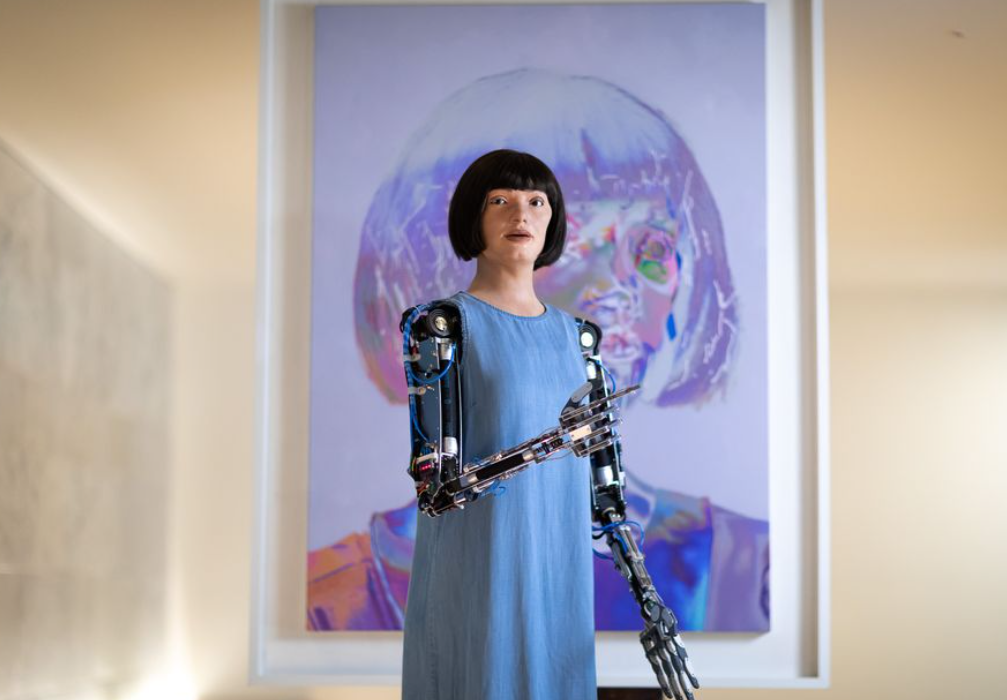
Last November, a painting sold at Sotheby's in New York for $1.08 million. That's not unusual for a major auction house. What made it different: the artist was a robot.
The painting is called A.I. God: Portrait of Alan Turing, and it was made by Ai-Da - a humanoid robot designed to look like a woman with short dark hair, equipped with cameras in her eyes and a robotic arm that can hold a paintbrush. The auction estimate had been $120,000 to $180,000. Bidders pushed it to more than six times that.
Why this matters?
The obvious question this story raises is one children ask naturally: can a robot be creative? Meller is upfront that Ai-Da doesn't work alone - she discusses subjects with her human team, and relies on AI tools and a programmed robotic arm. Whether that counts as creativity is exactly the kind of question worth debating at the dinner table.
The money from the sale is going toward making Ai-Da a better robot artist. Her creator notes she's already on her third painting arm.
Who is Ai-Da, and who is Alan Turing?
This is a story worth telling kids in full, because the two names at the centre of it are connected in a way that feels almost poetic.
Alan Turing was a British mathematician who, in the 1940s, helped crack Nazi codes during World War II and laid much of the intellectual groundwork for modern computers and artificial intelligence. He is, in many ways, the reason AI exists at all. Turing was also treated appallingly by the British government for being gay, and died in 1954. He has since been officially pardoned and is now on the British £50 note.
Ai-Da was created in 2019 by Aidan Meller, who worked with a team of scientists — including engineers from Oxford — to build a robot that could make and discuss art. The name is a double reference: to AI itself, and to Ada Lovelace, the 19th-century mathematician widely regarded as the world's first computer programmer.
For the Turing portrait, Ai-Da's team discussed the theme of "AI for good" before the robot began working. Ai-Da made 15 separate paintings of different parts of Turing's face — each one took six to eight hours — then selected three to combine into the final piece. A 3D printer was used to scale the work up to its full size.
Sources: Smithsonian Magazine and NewsForKids.net