STEM Isn't What You Think It Is
Most parents who say they're not "science people" had one bad teacher. A classroom where being wrong was embarrassing and the method mattered more than the curiosity. That's not STEM. That's a particular kind of bad science lesson, and it has a lot to answer for.

Most of the parents who tell me they're not "science people" had one bad teacher. A classroom where being wrong was embarrassing, where the method mattered more than the curiosity, where the point was the answer and not the question.
That's not STEM. That's a particular kind of bad science lesson, and it has a lot to answer for.
The myth doing the most damage
The one that stops parents before they start: that some children are science kids and some aren't, and you can tell which is which fairly early.
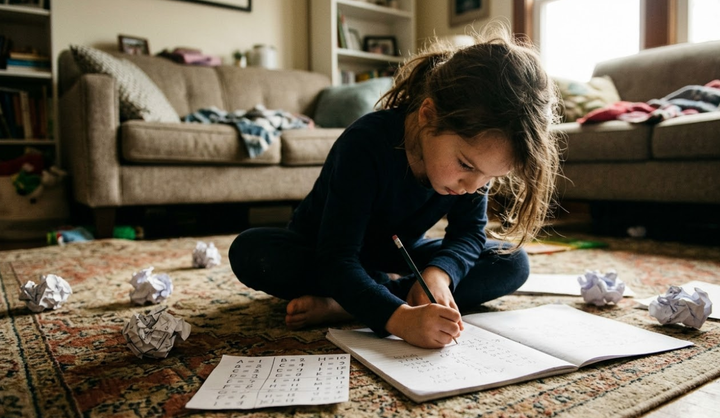
This isn't true, and the evidence against it is sitting in your kitchen. The child who asks why the toast burns at the edges but not in the middle. The one who wants to know what's inside the remote control. The one who drops something from different heights to see which hits the floor first. These are science kids. They're also just kids — all of them, doing what children do, which is notice things and wonder about them.
The children who appear "naturally good" at science are almost always just the ones who've had more opportunity to explore it. Not a better brain. More chances to mess around with how things work, in an environment where being wrong didn't matter.
The equipment problem
The second myth: that you need specific things. Kits, beakers, lab setups, a garage that looks like something from a television programme.
Baking soda and vinegar. A glass of water and a torch. Seeds planted in two different spots to see which grows faster. These are acid-base chemistry, light physics, and the scientific method — not metaphorically, but literally. The concepts are real. The equipment is from the back of the cupboard.
The most important tool in any of this isn't something you can buy. It's the question "what do you think will happen?" asked before the experiment, and "what do you think went wrong?" asked after. That's the whole thing. Everything else is prop.
The boredom problem
Parents sometimes worry their child will get bored — that once they've done the volcano, the volcano is done.
Children don't get bored with repetition. They get bored with purposeless repetition. Watch a three-year-old drop a spoon from a high chair seventeen times: that's not boredom, it's experimentation. They're testing what happens each time, adjusting, noting the result.
When a child wants to do the same experiment again — with more baking soda, with a different container, in a different room — let them. That's not laziness. That's the scientific method, and they've arrived at it on their own.
What actually kills the interest is being told what will happen before they try it. The moment the outcome is certain, the experiment becomes a demonstration rather than a discovery. Keep them in the driver's seat, even when — especially when — you already know the answer.
What you're actually worried about
Under most of these myths is one real concern: that you won't be able to keep up, that you'll get asked something you can't answer, that your own uncertainty will somehow hold them back.
It won't. Your uncertainty is an asset, not a liability. A parent who says "I don't know — let's find out" is showing their child something more valuable than the answer: that not knowing is the starting point, not a failure state. That adults encounter things they can't explain and find that interesting rather than embarrassing.
The children who stay curious longest are usually the ones who've seen the adults around them stay curious too.
You don't need to be a science person. You just need to be willing to be uncertain out loud, and to keep going anyway. That's all it takes.