Loona AI Robot Dog, KEYi Tech: Review
AI-powered companion robot made by KEYi Tech, a Chinese robotics company. The app "Hello Loona" runs on iOS and Android. Loona is not a STEM education tool that happens to be cute. It's a companion robot that happens to have some educational features bolted on.
Your child asked for a dog. You said no, for perfectly good reasons. The flat is too small, someone's allergic, nobody's home enough, or you simply cannot face another living thing that needs feeding at six in the morning. Then your child saw a video of a small wheeled robot with enormous cartoon eyes scooting across a kitchen floor, recognising its owner's face, and doing something that looked suspiciously like wagging. And now they want that instead. You're wondering whether this is a £400 problem or a £400 solution.
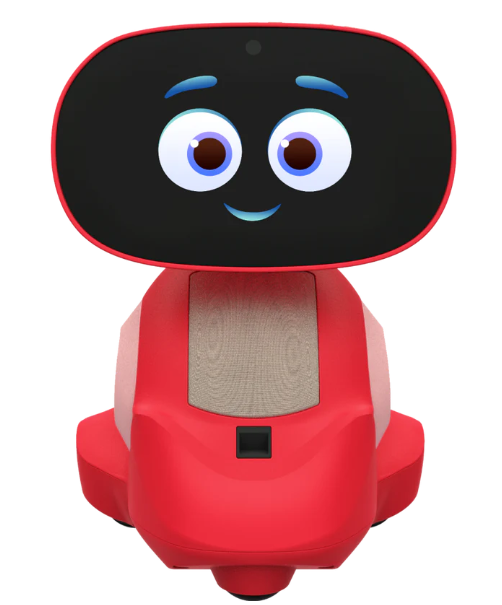
Loona is an AI-powered companion robot made by KEYi Tech, a Chinese robotics company that previously made the modular ClicBot. It doesn't walk, it rolls on four rubber-tracked wheels connected by a single central axis, which lets it tilt, raise a "paw," lift its head, and generally move with a fluidity that most consumer robots can't match. There's a screen on its face that displays animated eyes, ears that physically move via built-in motors, touch sensors on its head, a 720p camera, a 3D time-of-flight depth sensor, a four-microphone array, and a speaker. It ships with a charging dock it can return to on its own. The whole thing weighs about a kilogram and measures roughly 21cm long.
The app "Hello Loona" runs on iOS and Android, and it's where you do setup, control games, access the Blockly programming tool, and check the built-in camera remotely. Setup takes about fifteen minutes: charge it fully (three hours with the included charger), download the app, connect to your 2.4GHz Wi-Fi (it won't work on 5GHz, know this before you start), scan the QR code on its screen, create an account, pair, and update the firmware. The first-run experience includes a charming little animation implying your Loona has been brought to life by a spirit creature, which children enjoy. Then it scans your face and registers you as its owner.
The base price is around $500, with discounts occasionally bringing it to about $430–$500 depending on bundles. At current exchange rates that puts it at roughly £400 new. Amazon UK stock is intermittent - it's often fulfilled from overseas, so delivery times vary. Secondhand units on eBay typically go for $200–$300, so around £160–£250 if you can find one. KEYi also sells a considerable range of outfits and accessories at £15–£85 a time, which gives you a clear signal about their business model. The ChatGPT-4o integration is currently offered for free, but the word "currently" is doing heavy lifting in that sentence - there's no guarantee it stays that way.
What it's genuinely good at
The physical expressiveness is the thing that earns Loona its keep. The combination of four wheels on a single central axis lets it turn on a dime, raise a "paw," lift and lower its head, and much more - all from a relatively simple mechanical design that avoids introducing multiple points of potential failure. When you pet its head, it leans into your hand. When it's left alone, it wanders around making small curious noises, occasionally getting stuck on furniture and looking vaguely confused about it. One parent on a robotics forum described petting Loona and finding the reaction so convincing that, for a moment, the robot felt alive. That's the core of what Loona does well, it doesn't simulate a pet through a screen; it occupies physical space in your home and reacts to what's happening in it.
Children bond with it quickly. Loona recognises every family member by face and greets them by name Robot-puppy, which delights children who care about being individually known. The interactive games, fetch with a small ball, a bullfighting game, laser chase, follow-the-leader, keep younger children engaged for genuine stretches of time, not the five-minutes-and-done you get with most electronic toys. Multiple parents report the app is user-friendly enough that children aged five and six can navigate it without help.
The ChatGPT integration means your child can have actual conversations with Loona - ask it questions, get it to tell stories, or request explanations of things they're curious about. For a child who already enjoys talking to voice assistants, having that capability embedded in a physical creature that tilts its head and makes eye contact while it listens is a meaningfully different experience from talking to a speaker on a shelf.
There's also a Google Blockly programming interface in the app, where children can drag and drop colourful blocks to make Loona execute commands — no complex typing required. Your child can make Loona move in specific patterns, display particular emotions, or react to sounds. It's a gentle introduction to sequencing and cause-and-effect logic, not as deep as Scratch, but accessible enough for a six-year-old and satisfying enough to hold the interest of a nine-year-old for a few sessions. A child who programmes Loona to dance when it hears a clap has absorbed a basic if-then concept without anyone calling it a lesson.
Before you open the box
The battery life is the first thing to manage expectations on. KEYi states a 1,350mAh battery with up to 1.5 hours of continuous playtime. In practice, some users report 40–60 minutes in heavy active use, varying by what Loona is doing.
It takes about three hours to charge fully. For a child who's just fallen in love with their new robot companion, being told it needs to go back to its dock after an hour can be a difficult conversation. The good news is that Loona returns to its dock automatically when the battery gets low, so at least you're not fishing it out from under the sofa with a dead battery. If you set the expectation from day one that Loona has "nap times" just like a real pet, this becomes manageable rather than maddening.
Voice commands are Loona's most persistent weak spot. Every interaction starts with saying "Hello Loona" and waiting for the ears to perk up and ripples to appear on the screen, only then can you give a command. Children find this unnatural. They want to just talk to it, the way they'd talk to an actual pet or a voice assistant. Worse, if Loona doesn't understand a command, it defaults to ChatGPT mode and starts having a conversation instead of doing what it was told. One father on a robotics forum described his daughter's frustration perfectly: she'd give commands, Loona would reply with chatty AI responses, and the whole interaction spiralled into a child repeating herself with increasing volume while the robot cheerfully carried on talking. You can turn off the ChatGPT fallback in settings, which helps, but you need to know it's there before the first session, not discover it mid-meltdown.
Voice recognition also requires a Wi-Fi connection for every command — nothing is processed on the device. In a house with patchy Wi-Fi or during an internet outage, Loona becomes a charming paperweight that can still wander around but won't respond to anything you say. If your broadband is reliable, this won't affect you. If it isn't, factor it in.
Software updates have been frequent, KEYi pushes them regularly, adding features and fixing bugs. This is mostly good news, except for one persistent complaint: updates sometimes reset progress, forcing users to repeatedly complete tutorials to unlock features, even after months of ownership. It's the kind of thing that wouldn't bother an adult but infuriates a child who had everything set up just the way they wanted it. KEYi appears to be aware of the issue, and it has improved over time, but it hasn't gone away entirely.
One more thing worth knowing: Loona has a camera and microphone in your home, connected to the internet. The app allows remote monitoring - you can see through Loona's camera from your phone. KEYi says data processing happens on-device as much as possible, but voice commands go through Amazon's Lex service and conversations go through OpenAI's servers. If your household thinks carefully about connected devices with cameras in rooms where your children play, this deserves the same scrutiny you'd give any smart home device.
The verdict
Loona is not a STEM education tool that happens to be cute. It's a companion robot that happens to have some educational features bolted on. The Blockly programming is real but shallow - a child who's serious about coding will outgrow it in a few weeks and want something like Scratch or an mBot. The ChatGPT conversations are entertaining but limited. What Loona does better than almost anything else at this price is feel alive. The physical expressiveness, the emotional responses, the way it potters around your living room looking for things to be curious about, that's the product you're actually buying.
If your child is five to eight, wants a pet they can't have, and would be happy with something that follows them around, plays games, and responds when they talk to it, Loona is one of the best options available. The programming features are a genuine bonus at that age - not deep, but enough to spark curiosity.
If your child is nine or older and specifically wants to learn robotics or coding, Loona will charm them for a week and then sit on its dock while they ask for something they can actually build and programme from scratch. An mBot or Sphero BOLT would serve that child better at a lower price.
If your child just wants something that moves and makes noise without any effort or interaction, they want a remote-control car - cheaper, simpler, and nobody has to debug anything.
At £400 new, Loona costs more than most parents want to spend on something they're not sure about. If you can find one secondhand for £200–£250, the risk drops considerably. At full price, it's justified only if you're confident your child will engage with it regularly and only if you're comfortable with the battery life, the voice command quirks, and the connected-camera-in-your-home question. For the right child in the right household, Loona is a remarkable thing. For the wrong one, it's an expensive novelty with a three-hour charge time and ears that break.