Robotics for 11-12 Year Olds: The Year They Stop Needing the Instructions
Most 11yo read the tutorial once, then close it. The kits that fail at this age aren't too hard. They're too constrained. When a child can see the ceiling, they lose interest. The right kit is the one that lets them keep climbing.
Eleven-year-olds read the tutorial once, then close it. Twelve-year-olds sometimes skip it entirely. Whether that confidence is earned or premature depends on the kit, and choosing the wrong one at this age produces a specific kind of failure: not frustration, but boredom.
What changes from nine and ten
The shift is less about motor skills or attention span, both largely adult-level by now, and more about abstraction. An eleven-year-old can hold a mental model of a system. They can think about what a sensor reading means, not just what it does. They can plan a project that takes three sessions to complete and return to it with the thread intact.
What develops most meaningfully is the capacity for genuine debugging. At nine, debugging meant an adult asking the right questions. At eleven, most children can isolate a problem in their own code, form a hypothesis, and test it. Not always efficiently, but independently. That independence is what opens up the more demanding kits.
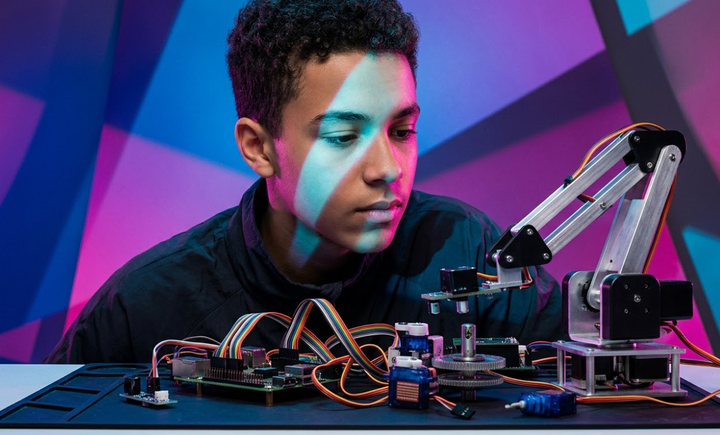
They can also, for the first time, read documentation. Not children's guides with colour-coded steps, but actual reference material: pin diagrams, Python library pages, forum posts. Some will do this willingly. Others will resist until they're stuck enough that the alternative is giving up.
What they still struggle with is scope. An eleven-year-old will plan a project that would take a professional engineer a week and expect to finish it in an afternoon. Managing that gap between ambition and reality is the defining parental role at this age.
The kits
ELEGOO Smart Robot Car Kit V4.0
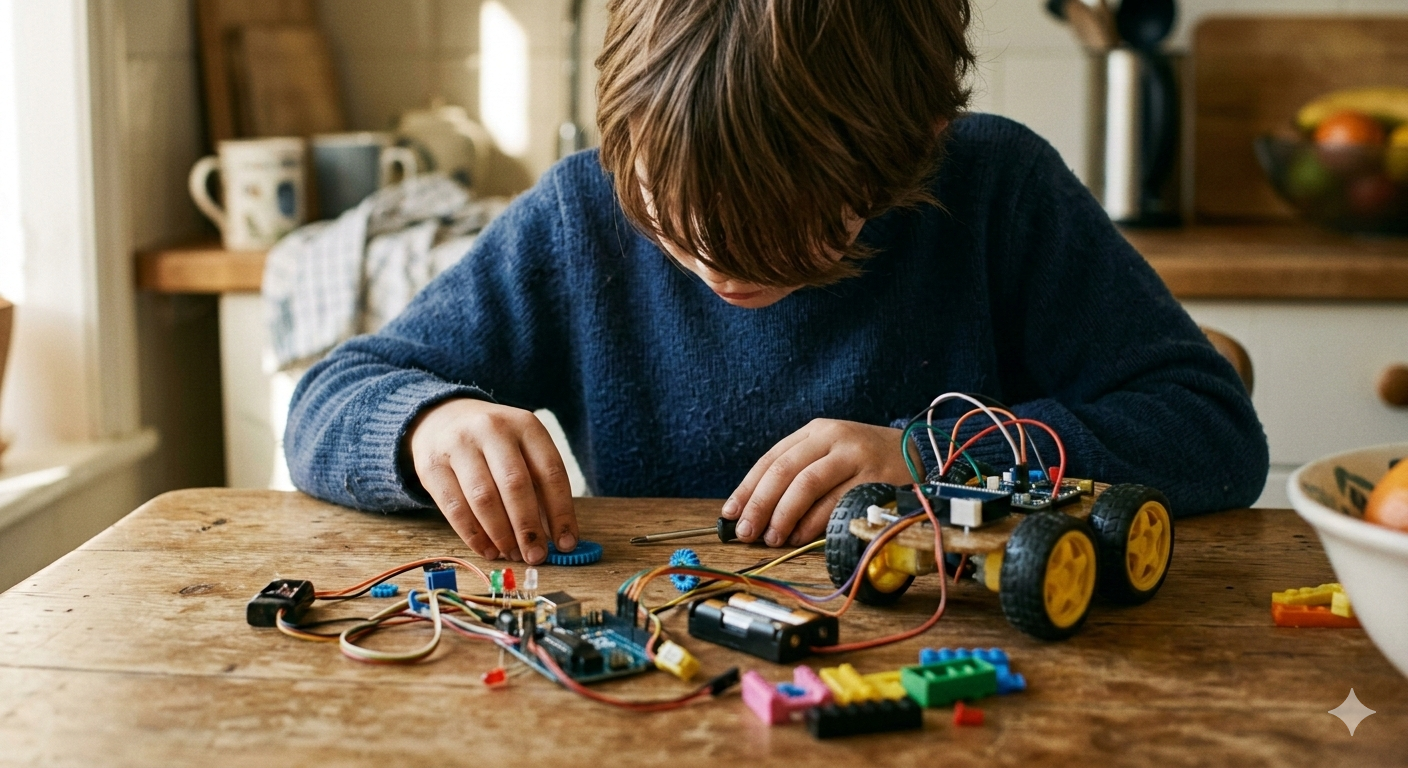
This is the first item on the list that doesn't pretend to be a toy. It arrives as components in bags: an Arduino UNO board, an ultrasonic sensor, motor drivers, wheels, a chassis, and a camera module. Assembly takes roughly 90 minutes and requires following a tutorial that assumes the builder can read a wiring diagram.
The first session is mostly building. The payoff arrives when the car drives for the first time. But the real work starts after, when a child opens the Arduino IDE and sees actual C-based code controlling each behaviour. Changing what the car does means changing that code, compiling it, and uploading it. The feedback loop is slower than Scratch, and a misplaced semicolon stops everything.
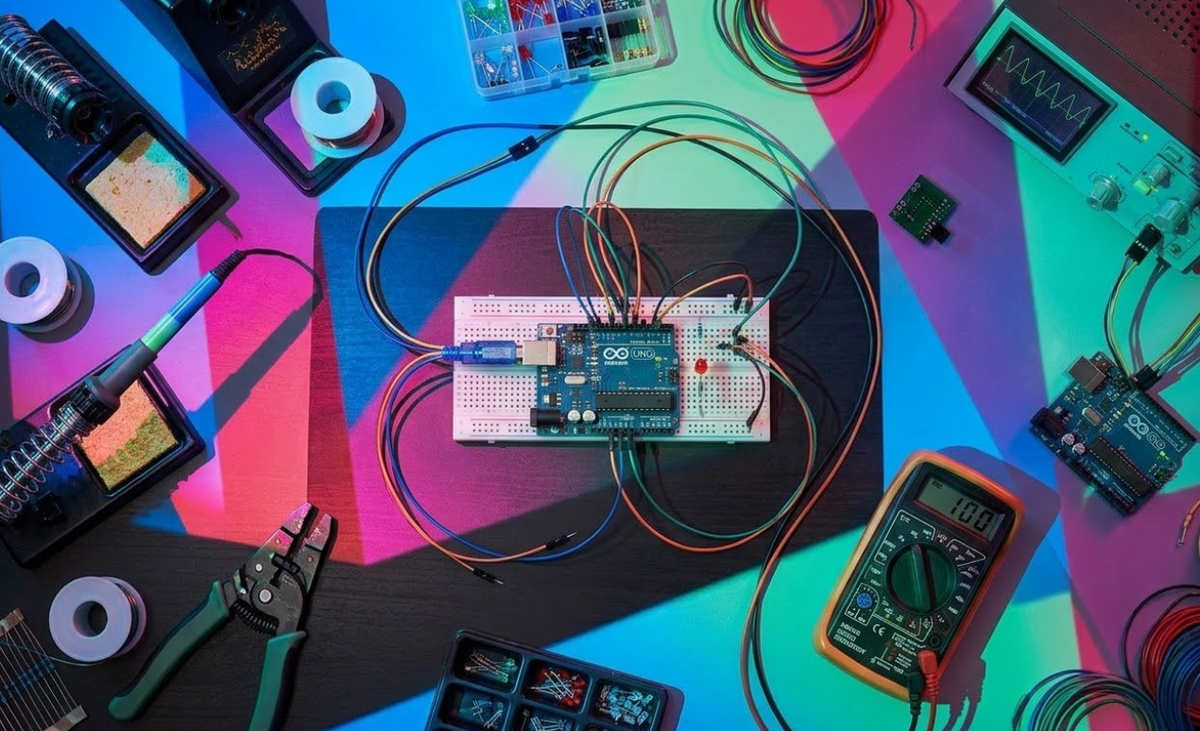
At around £60-70, the price is remarkably low. The Arduino community is enormous, which means nearly every problem has been solved and documented somewhere online. That matters at this age, because searching for and applying a solution from a forum post is itself a skill worth developing.
The honest downside: the V4 kit ships with code that occasionally has compatibility issues with newer Arduino IDE versions. This is solvable, but it means the first session may involve troubleshooting the development environment rather than the robot. An adult comfortable with software installation should be around for initial setup.
Not for a child who wants results in the first twenty minutes. Very much for the one who has been asking what "real programming" looks like.
LEGO Education SPIKE Prime
SPIKE Prime is LEGO's education-focused robotics platform, aimed at roughly ages 11-14. It uses the same hub, motors, and sensors that appear in FIRST LEGO League competitions, which means a child working with SPIKE Prime at home is building directly relevant skills if they join a robotics team at school.
The build is familiar LEGO, but the pieces are Technic: beams, axles, gears, and motors that produce genuine mechanical movement. Programming starts in Scratch-style blocks and transitions to Python. The included lesson plans are structured, well-paced, and designed for classroom use, which means they work well for a parent-child pair but feel slightly formal compared to the open-ended exploration of an Arduino kit.
The honest downside is the price. SPIKE Prime retails at around £350-420 in the UK and $430 in the US. LEGO has also announced this product is retiring in mid-2026, which means stock may become harder to find. For a child likely to join a FIRST LEGO League team, the investment pays for itself in relevance. For a child exploring independently, it's a significant commitment for a platform with an announced end date.
Not for a family looking for an open-ended, long-term platform. Very much for a child heading toward competitive robotics or one who learns best through structured, curriculum-style progression.
Makeblock mBot2 (if they're starting fresh)
mBot2 appeared in the 9-10 guide as the lead recommendation. If your child used it at nine or ten and has already explored Python through mBlock, they've likely outgrown it. Move on to the ELEGOO car or a Raspberry Pi build.
If they're arriving at robotics for the first time at eleven, mBot2 remains a sensible starting point, but the experience compresses. Where a nine-year-old might spend weeks in the block-based interface, an eleven-year-old will often switch to Python view within the first session. That moment, seeing the text code behind the blocks, is usually when they're ready for something with more room.
Think of mBot2 at this age as a three-month kit rather than a year-long one. At £90, that's still reasonable value for the bridge it provides.
Raspberry Pi builds (the gap from nine has closed)
The 9-10 guide included Raspberry Pi with a firm caveat: not a solo project, and not for any household without an adult willing to be genuinely involved. At eleven and twelve, that changes. A child this age can follow a written tutorial, troubleshoot a terminal error by searching online, and manage the workflow of writing, saving, and running Python scripts with increasing independence.
A Raspberry Pi 4 or 5 paired with a motor controller and chassis kit costs under £100 total. The ceiling is whatever they can imagine. What's different from nine is that they can now reach that ceiling without someone sitting beside them for every session. They still need an adult for the moments when the terminal produces something genuinely incomprehensible, but those moments become less frequent rather than constant.
When things go wrong
The failure mode at this age is rarely frustration. It's abandonment. A child starts a project with enthusiasm, hits a hard problem on day two, and quietly stops. The kit sits on the desk, then moves to the shelf.
The useful intervention is not "why don't you work on your robot?" It's "what were you trying to make it do when you stopped?" That question reopens the problem without the emotional weight. Often, a child who articulates where they got stuck discovers they're closer to solving it than they thought.
The second common problem is scope creep. The child who planned a line-following robot now wants it to also respond to voice commands and connect to the internet. The parent's role is to help them finish version one before starting version two. "Make the line-following work perfectly first. Then we'll talk about the camera." That constraint is one of the most useful engineering habits a child can develop at this age.
Verdict
For an eleven-year-old arriving fresh, mBot2 gets them moving quickly, but expect them to outgrow it within months. The ELEGOO Smart Robot Car Kit is the strongest choice for a child ready to see real code and real electronics at a price that doesn't sting if interests shift. SPIKE Prime if competitive robotics is the goal and you're comfortable with the price. Raspberry Pi if the child is ready for genuine independence and there's an adult who can help when things go sideways.
The kits that fail at this age are almost never the ones that were too hard. They're the ones that were too constrained. An eleven-year-old who can see the ceiling of a kit will lose interest faster than one who can't yet see it but knows it's somewhere above them.
Eleven and twelve is when a child stops following instructions and starts writing their own. The robot is the excuse. The thinking is the point.
 Julian N
 Julian N