Free Engineering Projects for 6–10 Year Olds: What You Can Build From Your Recycling Bin
Three engineering projects from your recycling bin: a balloon-powered car, straw rockets, and a rubber band walker. No kit, no cost, no instructions to follow. Just cardboard, tape, and the particular satisfaction of making something work from scratch.
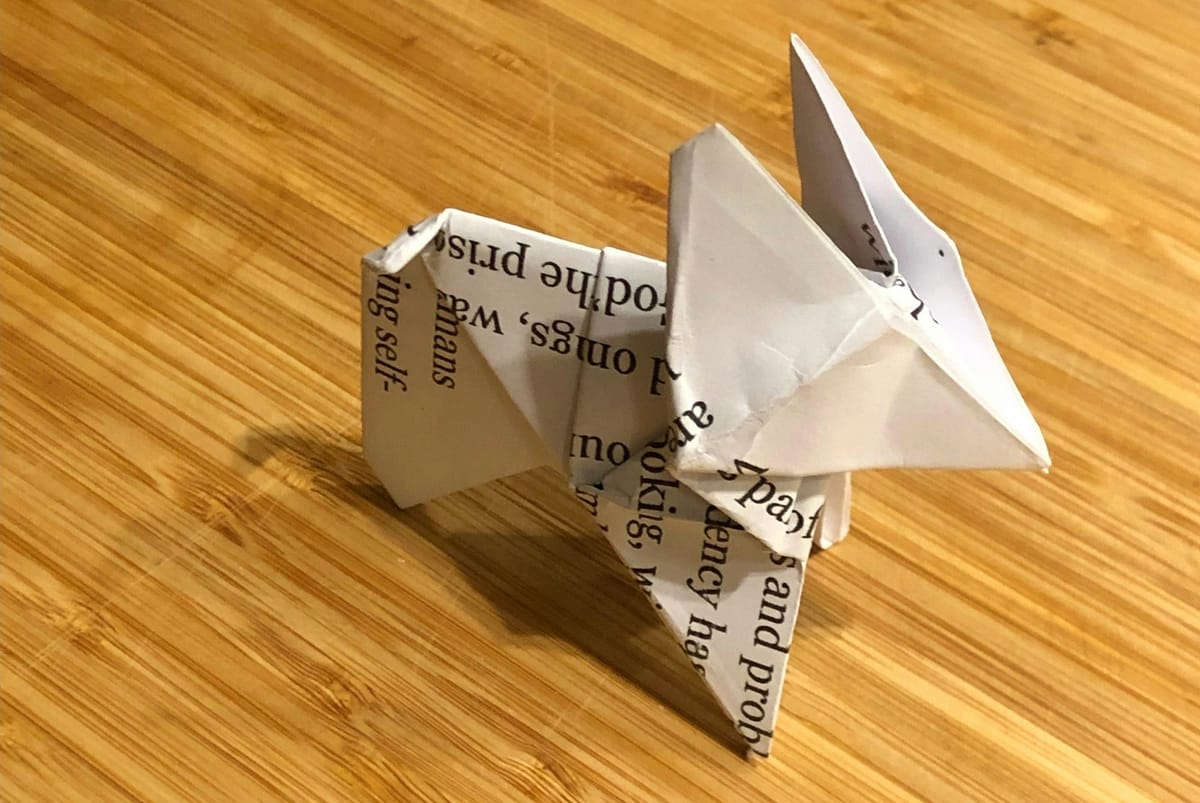
A cardboard car powered by a balloon uses the same principle as a jet engine. A paper tube with fins is an aerodynamics experiment. A rubber band wound around a pencil is a lesson in stored energy. None of them cost anything, and none of them require a kit.
These three projects work with materials most households are about to throw away. They're not a substitute for a robotics kit - they're something slightly different: open-ended builds with no correct answer, where failure is free and iteration is the entire point.
Balloon-Powered Car
What you need: A cereal box, tape, a balloon, 4 bottle caps, two skewers or pencils as axles.
Cut a rectangle of cardboard roughly the size of your hand. Poke two holes on each side and push the skewers through as axles. Tape bottle caps to the ends as wheels. Tape the balloon to the top with the opening pointing backwards. Blow it up, pinch it closed, set it down, and let go.
In the first 30 seconds, the car shoots forward — usually in a slightly wonky line, because the wheels are never perfectly aligned. That misalignment becomes the first engineering problem: adjust the axles, retest, see what changes. Children who've done this for 20 minutes without any instruction have independently discovered that lighter builds go further, that wheel friction matters, and that a bigger balloon isn't always better if the car can't carry the weight.
The honest note: it works best on hard floors. Carpet kills it.
Age: 6 and up can build this with light help. Under 6, build it together and let them run the tests.
Straw Rockets
What you need: Drinking straws, paper, tape, scissors.
Roll a small rectangle of paper tightly around a straw to form a tube, tape the seam, then slide it off. Pinch one end closed for the nose cone. Cut small triangles from scrap paper and tape them on as fins. Slide the rocket back onto the straw, point it forward, and blow hard through the other end.
The first attempt usually tumbles. The fins are uneven, the nose cone isn't fully sealed, or the rocket is too heavy at the back. Children fix this not because anyone tells them to, but because they want it to fly straight, and that wanting is enough. By the fifth design, most children are running distance comparisons between different fin configurations without being asked.
This is the one that works for the widest age range. A 5-year-old is happy launching anything. A 10-year-old will spend an hour testing fin geometry.
Age: 5 and up. Scales naturally with the child's interest in optimising.
Rubber Band Walker
What you need: Cardboard, a rubber band, a pencil.
Cut a rough table shape from cardboard — a rectangle with four legs. Poke a hole through the middle of the body and thread a pencil through as an axle. Attach one end of the rubber band to the body, loop the other end around the pencil, and wind the pencil until the band is tight. Set it down and release.
It lurches forward. Usually only a few centimetres before tipping over or spinning in place. Getting it to actually walk in a straight line requires adjusting leg length, rubber band tension, and weight distribution, and most children will spend considerably longer on this than they expected to.
This is the hardest of the three, which makes it the best one for 8 and up. The failure modes are less obvious than the other projects, so the debugging takes more patience.
Age: 7 and up to build independently. Younger children can help test and wind.
Why These Are Worth the Mess
Expensive kits come with instructions. Follow step 12, and step 13 works. These don't. A balloon car that veers into the skirting board isn't a broken product — it's a problem to solve. Children who build these are making decisions: try a bigger balloon, realign the wheels, add a fin, shorten a leg. Each decision produces a result they can observe.
That cycle — build, test, adjust — is the same one that underlies every robotics kit on the market. The difference is that here, nothing breaks in a way that costs money. If it doesn't work, you rebuild it. The cardboard goes back in the recycling.
Total cost: Free to £1 / $1.
Time per project: 15–20 minutes to build, considerably longer to test.
Age range: 5–10, with the rubber band walker best suited to the older end.
The balloon car is the easiest starting point. Build it once, then hand it to them and leave the room.