Nothing Works the Way You'd Expect
On the Moon you'd weigh a sixth of what you weigh now. On Jupiter, more than double. And on Venus, a single day lasts longer than its entire year, the Sun rises in the west, and nobody is entirely sure why.
Two facts that sound wrong and aren't. One about your weight, one about time. Yet another dinner conversation with kids.
You Would Weigh Different Amounts on Every Planet
Stand on a bathroom scale right now. Whatever number you see depends entirely on one thing: how hard the ground is pulling you down. Move to a different planet and the pull changes.
On the Moon, you would weigh about a sixth of what you weigh on Earth. A child who weighs 30 kilograms here would weigh five. You could jump six times higher than normal, clear a dining table without effort, and land softly enough to do it again. The Apollo astronauts bounced around like this, and the footage still looks like someone pressed slow motion by accident.
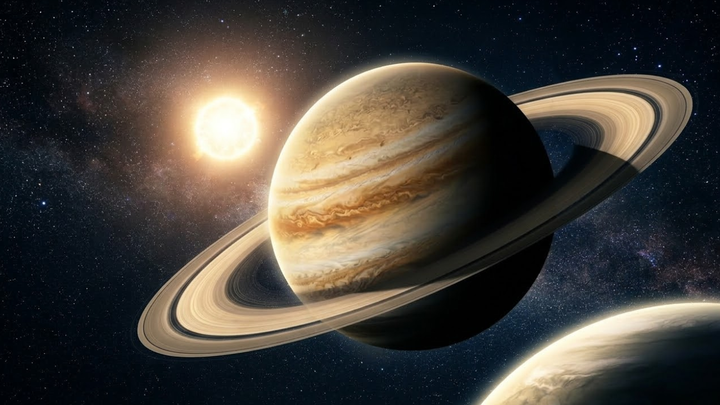
On Jupiter, the opposite. That same 30-kilogram child would feel like they weighed about 71 kilograms. Standing up would feel like carrying another person on your back. Walking would be exhausting. Sitting down would be a relief.
Your body does not actually change. Not a single atom is added or removed. You are the same person, the same mass, the same size. What changes is how tightly the planet grips you. Mars grips gently. Jupiter grips like it means it.
I find it quietly strange that something as personal as your own weight is really just a conversation between you and whatever rock you happen to be standing on.
A Day on Venus Is Longer Than a Year on Venus
Venus takes about 225 Earth days to orbit the Sun. That is its year. It also takes about 243 Earth days to spin once on its axis. That is its day. The day is longer than the year. Read that again if you need to. It is not a typo.
It gets stranger. Venus spins backwards. Every other planet in the solar system (with a partial exception for Uranus, which rolls on its side) spins in the same direction it orbits. Venus does not. If you could stand on its surface and somehow survive the crushing pressure and 450-degree heat, the Sun would rise in the west and set in the east.
Nobody is completely sure why. The leading idea is that something enormous hit Venus early in its history and either reversed its spin or flipped it upside down. Whatever happened, Venus kept going, and it has been spinning the wrong way, slowly, ever since.
A planet where a single day outlasts an entire year, and the Sun rises on the wrong side. Venus looks so much like Earth from a distance. Up close, almost nothing matches.