Did You Know? The Sun You See Isn't Really There
Sunlight takes eight minutes to reach Earth. Every time you look up, you are seeing where the Sun was, not where it is. If it vanished right now, you wouldn't know for over eight minutes. And that star you're not quite seeing? You could fit 1.3 million Earths inside it.

Two facts about the star that runs everything. One might change how you look at the sky tomorrow morning.
You Have Never Seen the Sun in Real Time
The Sun is about 150 million kilometres away. That is close enough to warm your face, but far enough that its light takes eight minutes and twenty seconds to reach you. Every time you look at the Sun (don't look at the Sun), you are seeing where it was eight minutes ago. The real Sun has already moved on.
This means that if the Sun suddenly vanished, you would not know for over eight minutes. You would still feel its warmth, still see its light, still cast a shadow. Everything would seem perfectly normal. Then, all at once, darkness. That thought sits with me in a way I did not expect. We are always living slightly in the past when it comes to our closest star.
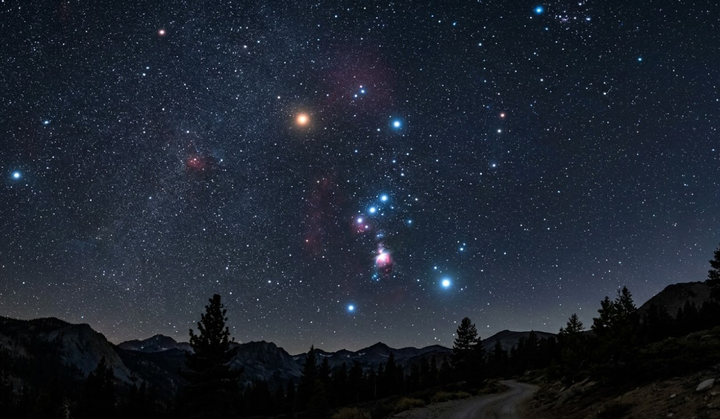
The same is true for every star you see at night, only the delays are far longer. The light from some of the stars visible to the naked eye left its source before humans existed. You are not looking at the sky. You are looking at history.
You Could Fit 1.3 Million Earths Inside It
The Sun accounts for 99.8% of all the mass in the solar system. Everything else, every planet, every moon, every asteroid, every grain of dust, shares the remaining 0.2%. Jupiter, which feels enormous when you read about it, is a rounding error.
In volume, you could pack roughly 1.3 million Earths inside the Sun. To picture that, imagine Earth as a small pea. The Sun would be a front door. Every planet you have ever learned the name of, every world with its own weather and mountains and moons, would fit inside with room to spare.
Next time you feel the Sun on your skin, remember: the light making that warmth left a star a million times the size of your planet, travelled 150 million kilometres through empty space, and arrived eight minutes later to land on exactly you.
 Marcus F
 Marcus F