The Night the Sky Fell
Age 5-8. Something moved. A line of light. Quick and bright. It slid across the sky like someone had drawn on it with a white crayon. "Did you see that?" Lila whispered. She held very still. Her eyes wide. Then another one came.

Once, on a warm night, a little girl named Lila sat on a blanket in her garden.
She was looking up.
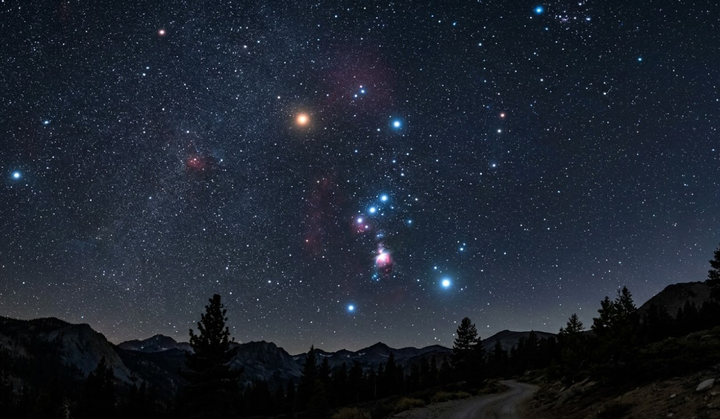
The stars were out. Lots of them. And Lila was trying to count.
"Fourteen… fifteen… six—"
Then something moved.
A line of light. Quick and bright. It slid across the sky like someone had drawn on it with a white crayon.
"Did you see that?" Lila whispered.
She held very still. Her eyes wide.
Then another one came.
This time it was longer. It stretched from one side of the dark to the other, and then it was gone.
"The sky is falling," Lila said. But she didn't feel scared. She felt excited.
"What are those?" she asked.
Her mum sat down on the blanket beside her. "Those," she said, "are tiny pieces of dust."
"Dust?"
"Dust. Smaller than a grain of sand."
Lila looked at her hand. She thought about sand at the beach. The tiny bits that stick between your fingers.
"But it was so bright," she said.
"That's the thing about dust in space," her mum said. "It moves very, very fast. Faster than anything you've ever seen. And when it hits the air above us — whoooosh."
"It lights up?"
"It lights up. All that speed turns into heat. And all that heat turns into light."
Lila lay back on the blanket.
She tried to think about it. Something that small. Moving that fast. Burning that bright.
"But where does the dust come from?" she asked.
"Comets," her mum said. "You know comets? Big balls of ice and rock that fly around the Sun?"
Lila nodded. She'd seen a picture once. A fuzzy ball with a long, glowing tail.
"When a comet flies close to the Sun, it starts to crumble. Just a little. It leaves a trail of tiny pieces behind it. Like crumbs from a biscuit."
Lila smiled. She thought of the crumbs she left on the sofa sometimes. The ones her mum always found.
"So the sky isn't falling," Lila said.
"No."
"It's just… crumbs."
"Crumbs from a comet. Burning up before they ever reach the ground."
Another streak of light crossed the sky. Lila pointed, but it was already gone.
She pulled the blanket up to her chin.
Somewhere out there, a comet had passed by a long time ago. It had left a trail. And tonight, Earth was walking right through it.
Tiny, ancient crumbs. Lighting up one by one.
Lila closed her eyes. But only for a second. She didn't want to miss the next one.
A note for grown-ups: Meteors or "shooting stars" are caused by small particles of space debris (often no bigger than a grain of sand) entering Earth's atmosphere at speeds up to 70 kilometres per second. The friction with air molecules produces intense heat and the streak of light we see. Most of this debris comes from comets that shed material as they orbit the Sun.